If your skin feels tight, looks dull, and shows fine lines that seem to appear out of nowhere, you may be dealing with dehydration rather than a permanent skin type. Dehydrated skin is one of the most common and most misunderstood skin conditions, and Korean skincare offers some of the most effective strategies to restore deep, lasting hydration.
Dehydrated Skin vs. Dry Skin: Understanding the Difference
This distinction is critical because it determines the right treatment approach.
Dry skin is a skin type. It is determined by genetics and characterized by a lack of oil (sebum) production. People with dry skin have fewer active sebaceous glands, which means their skin consistently feels tight and may flake or peel. Dry skin needs oil-rich, emollient products.
Dehydrated skin is a skin condition. It is caused by a lack of water in the skin and can affect any skin type, including oily skin. You can have oily, dehydrated skin where your face produces excess sebum yet still feels tight and looks dull because the water content in your skin cells is insufficient.
Signs of Dehydrated Skin
- Skin feels tight, especially after cleansing
- Dull, lackluster complexion that looks tired
- Fine “dehydration lines” that appear suddenly, especially around the eyes and forehead
- Makeup settles into fine lines or looks patchy
- Skin may feel both oily and dry at the same time
- Increased sensitivity or stinging when applying products
- Loss of plumpness and elasticity
What Causes Skin Dehydration?
Understanding the causes helps you both treat and prevent dehydration from recurring.
- Over-cleansing or using harsh cleansers – Stripping cleansers with high pH levels damage the moisture barrier and allow water to escape from the skin.
- Over-exfoliating – Excessive use of AHAs, BHAs, or physical scrubs compromises the protective lipid layer.
- Environmental factors – Cold weather, dry indoor heating, air conditioning, wind, and low humidity all pull moisture from the skin.
- UV exposure – Sun damage weakens the moisture barrier over time.
- Insufficient water intake – While drinking water alone will not cure dehydrated skin, chronic low fluid intake contributes to the problem.
- Skipping moisturizer – Especially common among people with oily skin who fear adding moisture.
- Alcohol-heavy skincare products – Denatured alcohol (alcohol denat.) in toners and essences evaporates quickly, taking moisture with it.
The Korean Approach to Hydration
Korean skincare treats hydration as the single most important foundation of healthy skin. Rather than relying on one thick cream to deliver moisture, K-beauty uses a layering approach that builds hydration gradually, allowing each layer to absorb fully before the next is applied. This philosophy produces better results because thin, water-rich layers penetrate more effectively than one heavy occlusive product.
The 7-Skin Method
One of the most celebrated Korean hydration techniques is the 7-skin method (the word “skin” is Korean for toner). The concept is simple: instead of applying your hydrating toner once, you apply it in three to seven thin layers, patting each layer into the skin before adding the next.
How to do it:
- After cleansing, pour a small amount of hydrating toner into your palms.
- Press and pat the toner gently into your face and neck.
- Wait about ten seconds for the layer to absorb.
- Repeat this process three to seven times, depending on how dehydrated your skin feels.
- Continue with the rest of your routine.
This technique floods the skin with water-binding ingredients and creates a deeply hydrated base that makes every subsequent product more effective. Start with three layers and increase gradually – most people find five layers to be the sweet spot.
Best toners for the 7-skin method are fragrance-free, alcohol-free, and contain humectants like hyaluronic acid, beta-glucan, or glycerin. Avoid toners with exfoliating acids for this technique.
Layering for Maximum Hydration
Beyond the 7-skin method, the broader Korean layering strategy for dehydrated skin follows this logic:
- Humectants first – Water-binding ingredients (hyaluronic acid, glycerin, beta-glucan) draw moisture into the skin.
- Emollients second – Ingredients that smooth and soften (squalane, ceramides, fatty acids) fill in gaps in the skin’s surface.
- Occlusives last – Heavier ingredients (shea butter, petrolatum, plant oils) create a seal that prevents moisture from evaporating.
This three-layer strategy ensures that moisture is both delivered and locked in.
Key Hydrating Ingredients in Korean Skincare
Hyaluronic Acid
Hyaluronic acid is a humectant that can hold many times its own weight in water. Korean products often feature multiple molecular weights of hyaluronic acid: high-molecular-weight HA sits on the skin’s surface and prevents water loss, while low-molecular-weight HA penetrates deeper to hydrate from within. Look for products listing sodium hyaluronate or hydrolyzed hyaluronic acid for the best penetration.
Ceramides
Ceramides are lipids naturally found in the skin barrier. They make up roughly fifty percent of the barrier’s composition and are essential for retaining moisture. When the barrier is damaged, ceramide levels drop, and water escapes. Korean products with ceramides (especially ceramide NP, AP, and EOP) help rebuild and reinforce the barrier.
Squalane
Squalane is a lightweight, plant-derived emollient that mimics your skin’s natural sebum. It absorbs quickly, does not clog pores, and creates a smooth, supple finish. It is particularly useful for dehydrated skin that is also oily, since it provides moisture without heaviness.
Beta-Glucan
Beta-glucan is a powerful humectant derived from oats, mushrooms, or yeast. Studies suggest it may rival hyaluronic acid in moisture-binding capacity, and it also has soothing and anti-inflammatory properties. It is increasingly popular in Korean essences and serums aimed at dehydrated, sensitive skin.
Panthenol (Provitamin B5)
Panthenol attracts and retains moisture in the skin while also supporting barrier repair. It is commonly found in Korean soothing products and works well alongside ceramides and hyaluronic acid.
Repairing the Moisture Barrier
Dehydration and moisture barrier damage go hand in hand. If your barrier is compromised, no amount of hydrating product will stay in your skin because the water simply escapes through the damaged lipid layer.
Signs of a Damaged Moisture Barrier
- Stinging or burning when applying products that previously felt fine
- Redness and irritation
- Increased breakouts (a weakened barrier allows bacteria in)
- Extreme tightness and flaking
How to Repair It
- Simplify your routine – Temporarily stop all active ingredients (retinol, AHAs, BHAs, vitamin C) and focus only on gentle cleansing, hydration, and barrier repair.
- Switch to a low-pH cleanser – Your cleanser should have a pH between 5.0 and 6.0 to match the skin’s natural acid mantle.
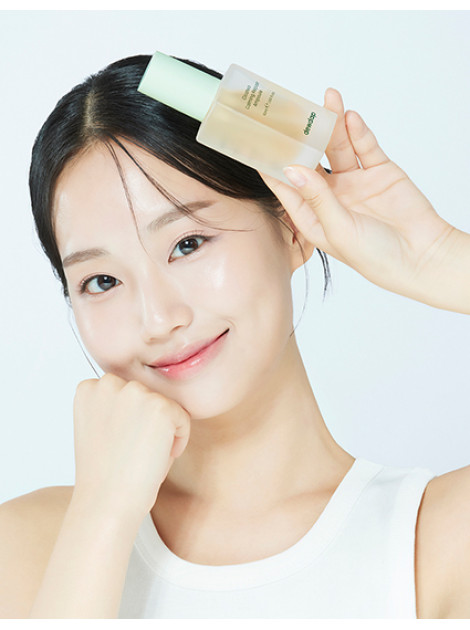
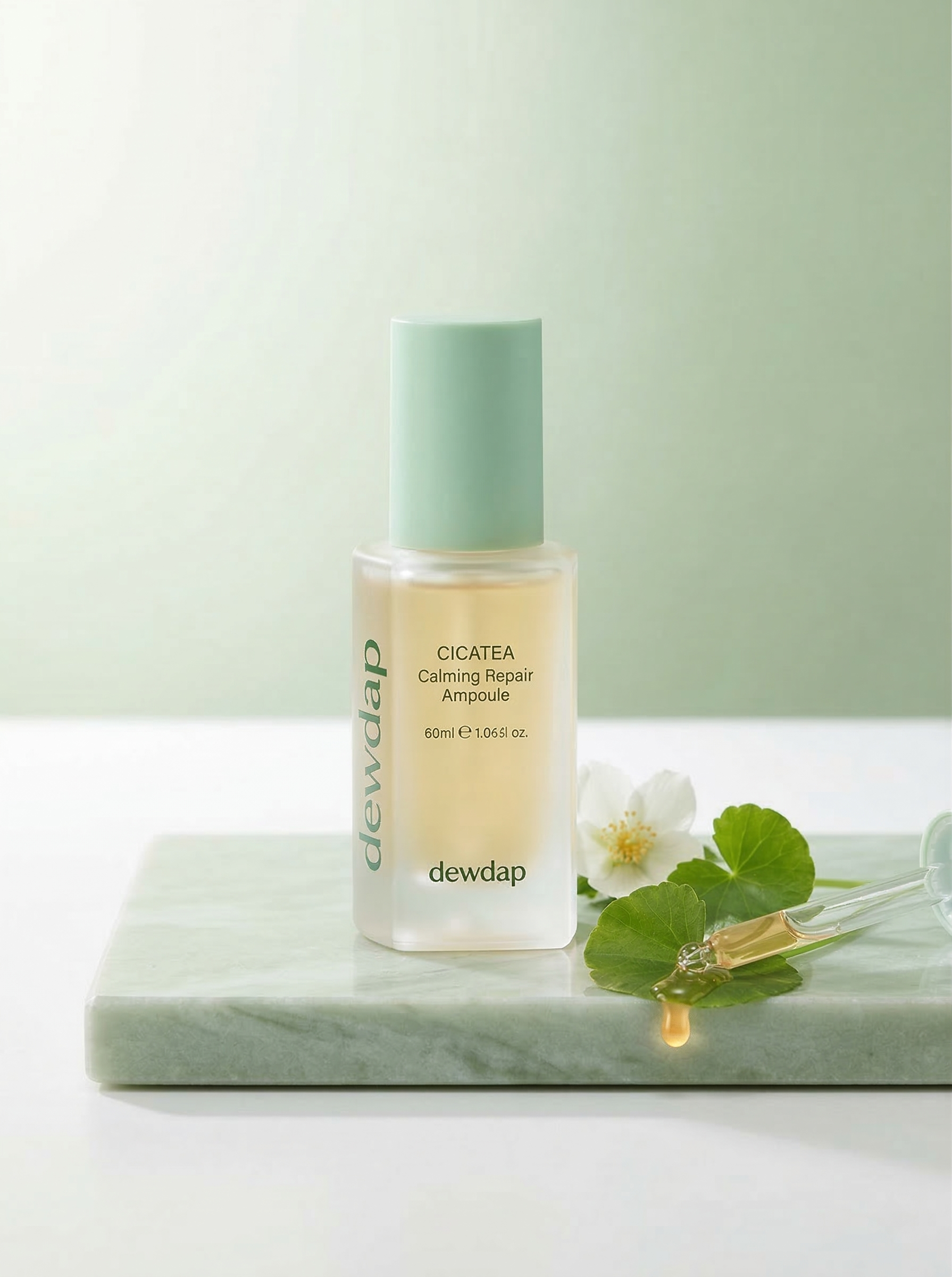
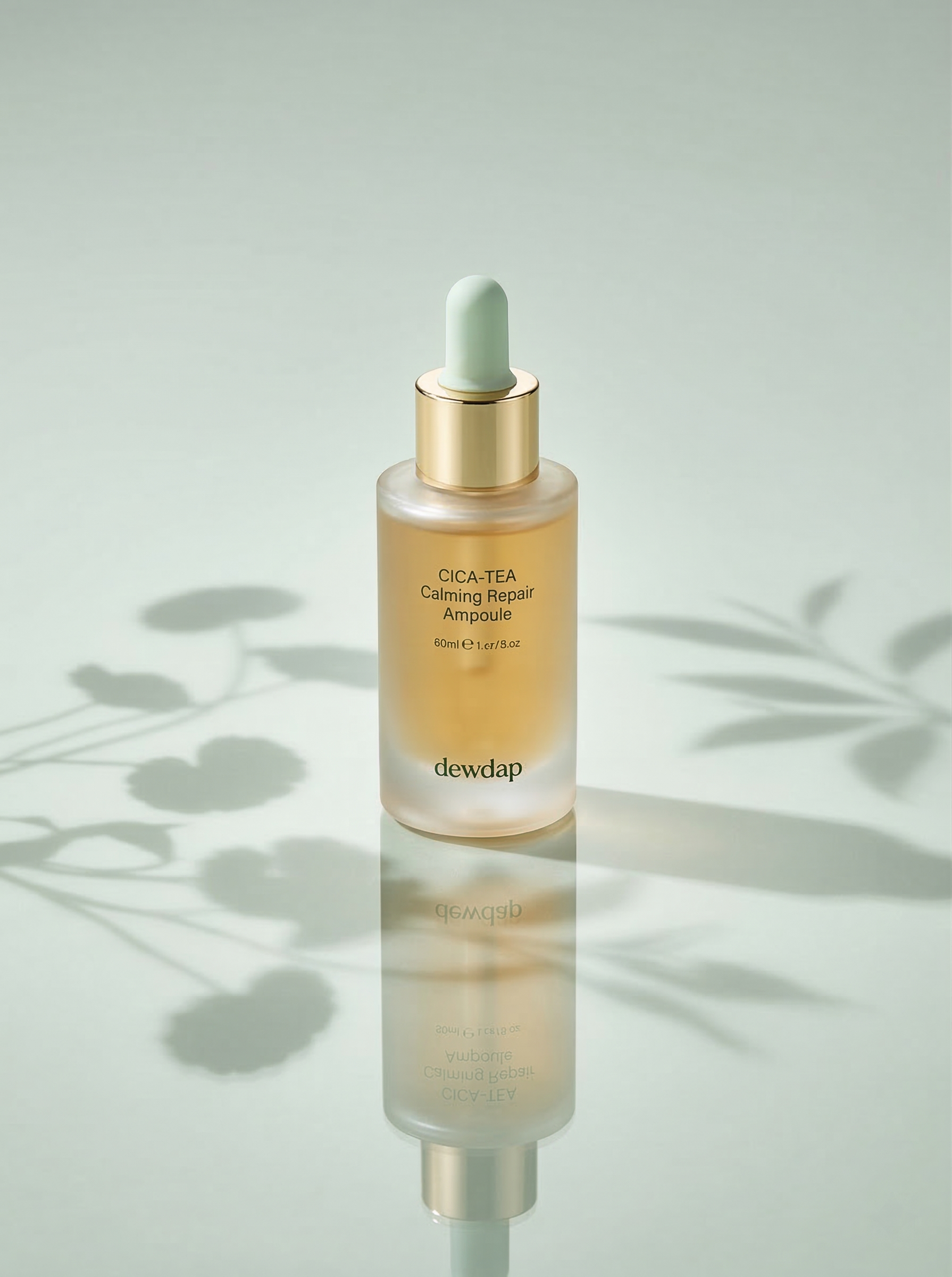
- Use ceramide-rich products – The Dewdap CICATEA Calming Repair Ampoule combines barrier-repairing ingredients with centella asiatica to soothe and restore compromised skin.
- Avoid fragrance and essential oils – These can further irritate a damaged barrier.
- Seal with an occlusive at night – A sleeping mask or a thin layer of a balm-type product prevents overnight water loss.
Barrier repair typically takes two to four weeks of consistent, gentle care.
A Korean Hydration Routine for Dehydrated Skin
Morning
- Gentle low-pH cleanser (or rinse with water only if skin is very compromised)
- Hydrating toner – Apply using the 7-skin method (3-5 layers)
- Hydrating essence with beta-glucan or hyaluronic acid
- Serum or ampoule with ceramides or panthenol
- Lightweight moisturizer with squalane or ceramides
- Sunscreen SPF 50+ PA++++ – Choose a hydrating formula, not a mattifying one
Evening
- Oil cleanser to remove sunscreen
- Low-pH water-based cleanser
- Hydrating toner (7-skin method)
- Essence
- Serum or ampoule focused on barrier repair
- Richer night cream or sleeping mask to seal in moisture overnight
Additional Tips
- Use a humidifier in dry environments, especially during winter or in air-conditioned spaces.
- Mist throughout the day – A facial mist with hyaluronic acid can provide a quick hydration boost, but always follow with a moisturizer or cream to lock it in. Misting without sealing can actually worsen dehydration as the water evaporates.
- Do not skip moisturizer if you have oily skin – Oily, dehydrated skin needs lightweight, water-based hydration. Gel-creams and emulsions are your best options.
- Be patient – Deeply dehydrated skin can take several weeks of consistent care to fully recover. You should notice improvements in plumpness and comfort within the first week, with full barrier recovery taking two to four weeks.
Korean skincare’s layering philosophy makes it uniquely suited to treating dehydration. By building moisture in thin, absorbent layers and sealing it all with protective ingredients, you give your skin the conditions it needs to heal, plump, and glow from within.