Why Morning and Evening Routines Are Different
Your skin has different needs at different times of day. Understanding this is fundamental to building an effective Korean skincare routine.
During the day, your skin faces environmental aggressors: UV radiation, pollution, wind, temperature changes, and the oxidative stress that comes from simply being exposed to the world. Your morning routine should focus on protection and defense, preparing your skin to withstand whatever the day throws at it.
At night, your body shifts into repair mode. Cell turnover accelerates, blood flow to the skin increases, and your body’s natural healing processes kick in. Your evening routine should focus on repair and treatment, giving your skin the ingredients and support it needs to regenerate while you sleep.
Using the exact same routine morning and evening means you are either under-protecting during the day or under-treating at night. Tailoring each routine to its purpose delivers significantly better results.
The Morning Routine: Protection and Preparation
Your morning routine should be efficient, lightweight, and focused on hydration, antioxidant defense, and sun protection. Heavy treatments and potent actives are generally better reserved for the evening.
Step 1: Gentle Cleanse
In the morning, you do not need a full double cleanse. Your skin has not accumulated makeup, sunscreen, or environmental pollution overnight. A single gentle water-based cleanser is sufficient to remove the natural oils and product residue from your nighttime routine.
Option for dry skin: Skip the cleanser entirely and rinse with lukewarm water. If your skin is not oily in the morning, water alone can be enough.
Option for oily skin: Use a mild gel or foam cleanser to control excess oil without stripping.
Step 2: Toner
Apply a hydrating toner to rebalance your skin’s pH and lay down the first layer of moisture. This step primes your skin for better absorption of everything that follows.
Pat a small amount into slightly damp skin. In the morning, one layer is usually enough. Save the multi-layer toning technique for your evening routine when you have more time.
Step 3: Essence (Optional)
If your skin needs extra hydration or if you live in a dry climate, a lightweight essence adds another layer of moisture without heaviness. In humid conditions or if you are short on time, you can skip this step in the morning.
Step 4: Serum — Antioxidant Focus
The morning is the ideal time for antioxidant serums, particularly vitamin C. Vitamin C neutralizes free radicals generated by UV exposure and pollution, providing an additional layer of defense alongside your sunscreen.
Best morning serums:
- Vitamin C (L-ascorbic acid): The gold standard antioxidant. Brightens, protects, and promotes collagen synthesis. Use concentrations between 10 and 15 percent.
- Niacinamide: Strengthens the skin barrier, controls oil production, and reduces hyperpigmentation. Plays well with almost every other ingredient.
- Centella asiatica ampoules: Products like Dewdap CICATEA Calming Repair Ampoule provide soothing, anti-inflammatory protection for sensitive skin throughout the day.
Avoid in the morning: Retinol (breaks down in sunlight), strong AHA/BHA exfoliants (increase photosensitivity), and heavy treatment oils.
Step 5: Eye Cream (Optional)
If you use an eye cream, apply it now with your ring finger, gently tapping around the orbital bone. Choose a lightweight, hydrating formula for daytime. Save richer, more intensive eye treatments for nighttime.
Step 6: Moisturizer
Use a lightweight moisturizer that hydrates without leaving a heavy or greasy layer that might interfere with sunscreen application and makeup wear.
For oily skin: A gel-cream or water-based moisturizer controls shine while providing adequate hydration.
For dry skin: A light cream with ceramides or hyaluronic acid maintains moisture throughout the day.
For combination skin: Apply a lighter formula all over and add a slightly richer product to dry patches if needed.
Step 7: Sunscreen
This is the most critical step of your morning routine. No exceptions. Sunscreen should be applied every single morning, regardless of weather, season, or whether you plan to go outside. UV radiation penetrates clouds and windows.
Apply a generous amount, approximately a two-finger-length strip, and spread evenly across your face, neck, and any other exposed areas. Wait two to three minutes before applying makeup to allow the sunscreen to set.
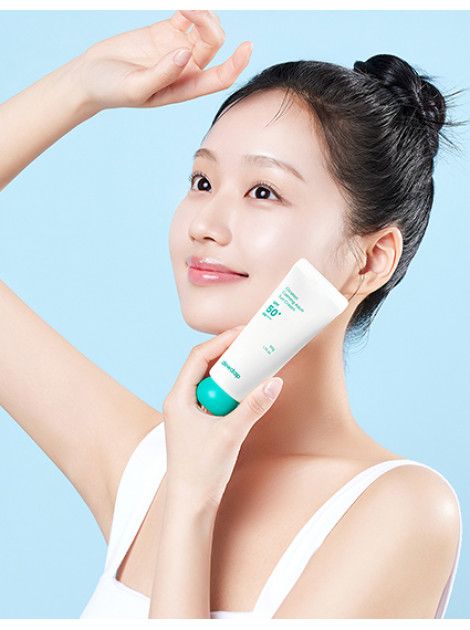
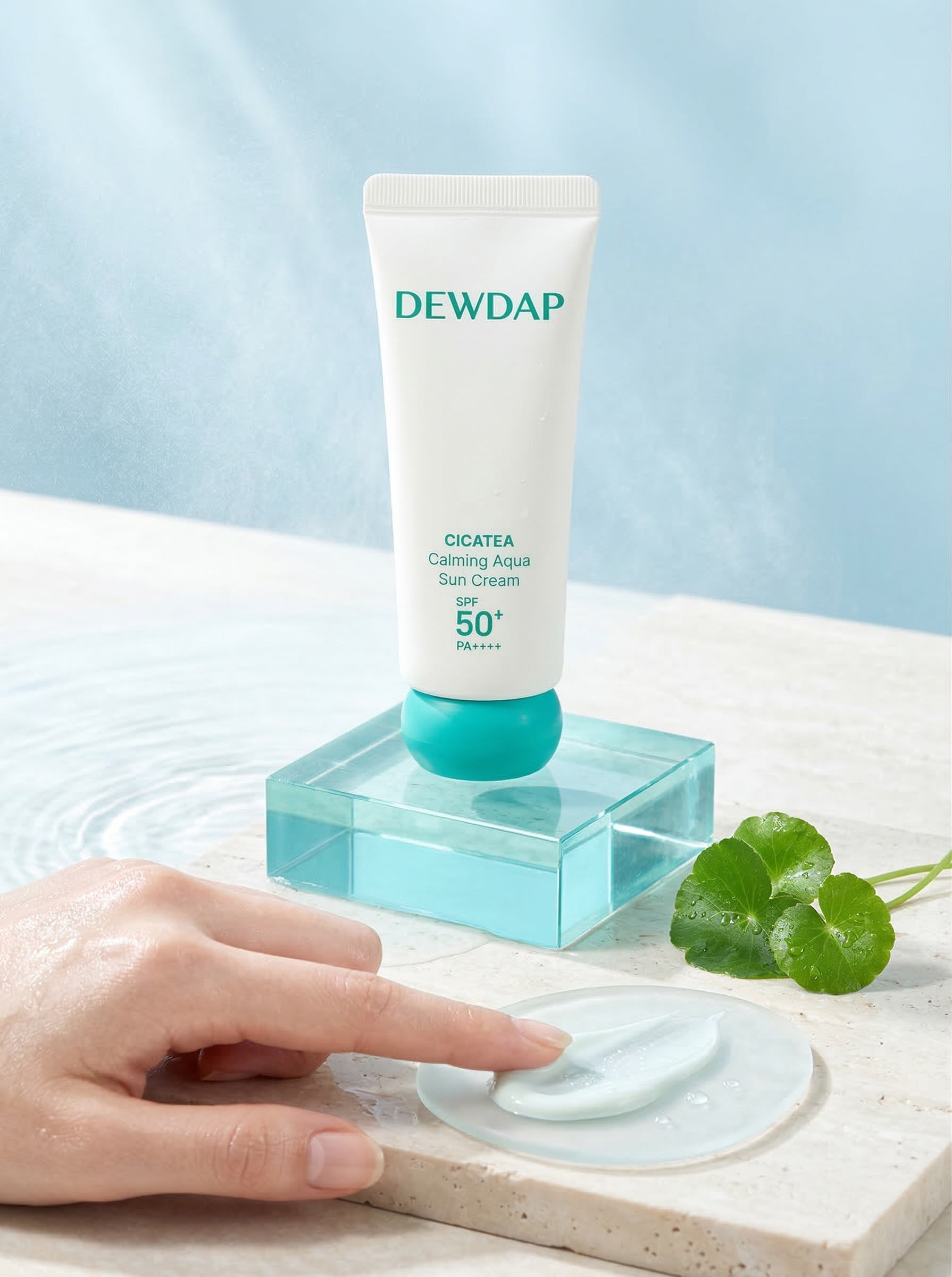
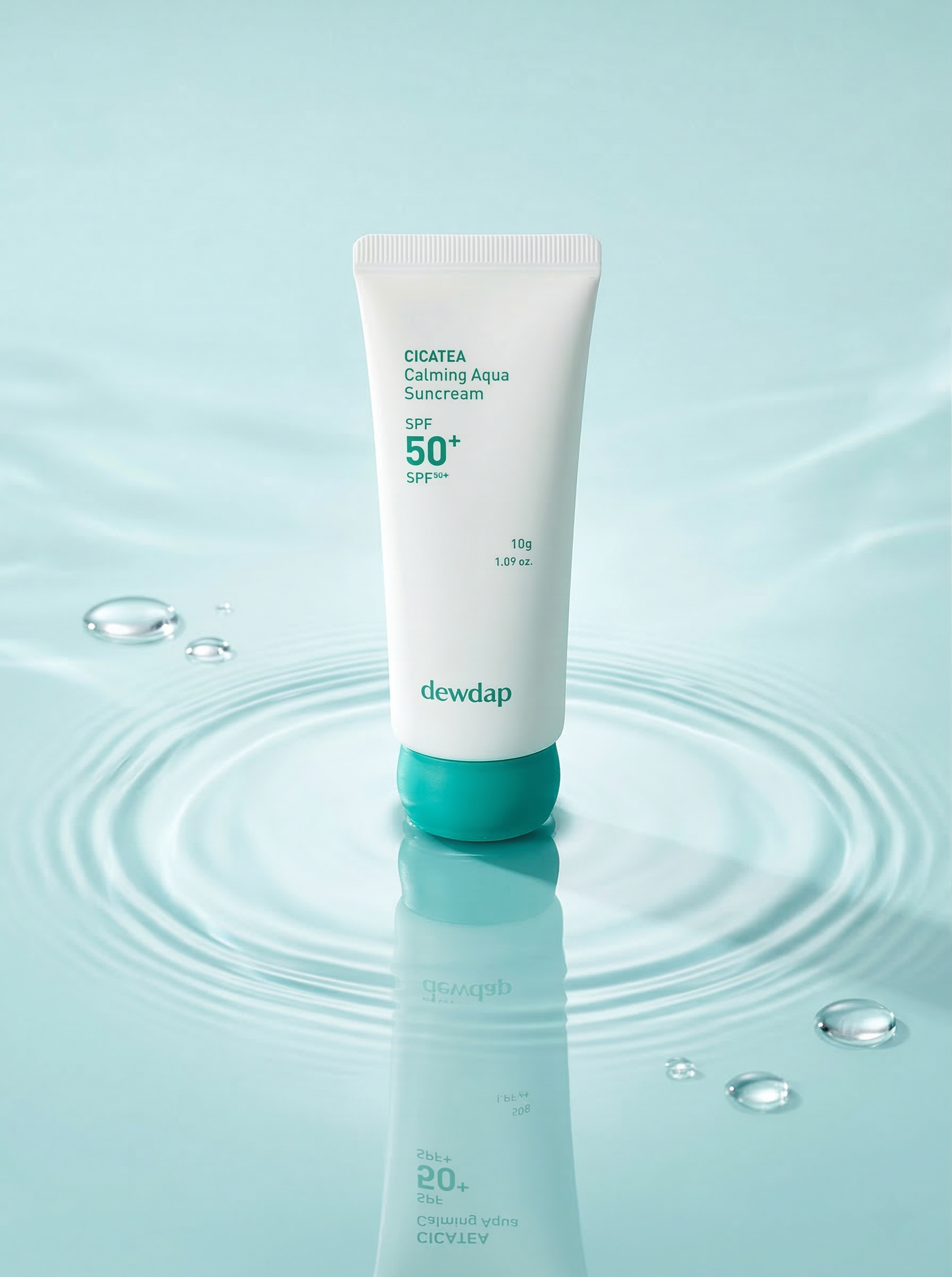
Products like Dewdap CICATEA Calming Aqua Suncream serve double duty: broad-spectrum UV protection with centella asiatica to keep sensitive skin calm throughout the day.
The Evening Routine: Repair and Treatment
Your evening routine is where the real work happens. With no UV exposure to worry about and hours of sleep ahead, you can use potent actives, rich moisturizers, and intensive treatments that need time to work.
Step 1: Oil Cleanser (First Cleanse)
The evening double cleanse begins with an oil-based cleanser to dissolve sunscreen, makeup, sebum, and oil-soluble pollutants. This step is essential. Water-based cleansers alone cannot adequately remove these substances.
Apply to dry skin, massage for 60 seconds, emulsify with water, and rinse.
Step 2: Water-Based Cleanser (Second Cleanse)
Follow with your water-based cleanser to remove any remaining residue. After this step, your skin should feel clean, balanced, and ready to absorb treatments.
Step 3: Exfoliant (2-3 Times Per Week)
On exfoliation nights, apply your chemical exfoliant after cleansing. AHA toners, BHA treatments, or peeling pads fit here. Allow the exfoliant to work for the time specified on the product (usually one to two minutes for pads, longer for leave-on treatments).
On non-exfoliation nights, skip this step entirely.
Do not exfoliate on the same night you use retinol. Alternate between these actives to avoid overwhelming your skin.
Step 4: Toner
Apply your hydrating toner just as you do in the morning. In the evening, you have more time, so consider applying two to three layers for deeper hydration, pressing each layer in before adding the next.
Step 5: Essence
A hydrating essence after toner provides the deep moisture reservoir your skin will draw from throughout the night. Fermented essences are particularly beneficial in the evening routine, as they promote cell turnover that aligns with your skin’s natural nighttime renewal cycle.
Step 6: Serum or Ampoule — Treatment Focus
The evening is the time for your most potent active ingredients. Apply your targeted treatment serum or ampoule after essence.
Best evening serums and treatments:
- Retinol: The most studied anti-aging ingredient. Promotes cell turnover, stimulates collagen, and fades hyperpigmentation. Start with low concentrations (0.025 to 0.05 percent) and build gradually.
- Peptide serums: Support collagen and elastin production while you sleep.
- VT Cosmetics Reedle Shot: The micro-spicule technology works optimally overnight when the skin is in repair mode and there is no risk of UV exposure.
- Centella asiatica ampoules: Repair and calm irritated skin overnight.
- Niacinamide: Works well both morning and evening; in the PM, it supports barrier repair during the regeneration cycle.
Step 7: Eye Cream
Apply a richer, more treatment-focused eye cream in the evening. Formulas with retinol, peptides, or caffeine (for dark circles and puffiness) are best used at night when they have hours to work without interference from sunscreen or makeup.
Step 8: Moisturizer
Your evening moisturizer can be richer than your daytime one. Choose a formula that creates a more occlusive barrier to prevent moisture loss during the night.
For dry skin: A thick cream with ceramides, shea butter, or squalane.
For oily skin: A slightly richer gel-cream than your morning moisturizer, but not so heavy that it clogs pores overnight.
Step 9: Sleeping Mask (2-3 Times Per Week)
On nights when your skin needs extra nourishment, apply a sleeping mask as the final step. This thick, occlusive layer seals in everything underneath and provides sustained hydration until morning. Rinse it off during your morning cleanse.
What Goes Where: Quick Reference
| Product | Morning | Evening |
|---|---|---|
| Oil cleanser | No | Yes |
| Water-based cleanser | Yes (gentle) | Yes |
| Exfoliant | No | 2-3x/week |
| Toner | Yes (1 layer) | Yes (2-3 layers) |
| Essence | Optional | Yes |
| Vitamin C serum | Yes | No |
| Retinol | No | Yes (alternate nights) |
| Niacinamide | Yes | Yes |
| Calming ampoule | Yes | Yes |
| Eye cream | Optional (light) | Yes (treatment) |
| Moisturizer | Lightweight | Rich |
| Sunscreen | Yes (mandatory) | No |
| Sleeping mask | No | 2-3x/week |
Common Questions
Do I really need all these steps?
No. The essential morning routine is cleanser, moisturizer, and sunscreen (three steps). The essential evening routine is double cleanse, moisturizer (three steps). Everything else is supplementary. Build gradually and add steps only when your skin needs them.
Can I use the same products morning and evening?
Some products work for both, like toner, moisturizer, and calming ampoules. Others are time-specific: sunscreen is morning only, retinol is evening only, and vitamin C is most effective in the morning.
What if I am too tired for the full evening routine?
At minimum, remove your sunscreen and makeup with a double cleanse and apply moisturizer. These three steps (oil cleanser, water-based cleanser, moisturizer) are the non-negotiable evening essentials. You can skip treatment serums, essence, and masks when time or energy is limited.
Simplified Routines for Busy Days
3-Minute Morning
- Rinse with water
- Moisturizer
- Sunscreen
5-Minute Evening
- Oil cleanser on dry skin, emulsify and rinse
- Water-based cleanser, rinse
- Moisturizer
Weekend Full Routine
Use your weekend for the complete routine including exfoliation, sheet masks, sleeping masks, and all treatment serums. This allows busy weekdays to remain streamlined while still giving your skin periodic intensive care.
The key principle to remember is this: protect in the morning, repair in the evening. As long as you follow this framework, you can adjust the number of steps, the specific products, and the intensity to match your schedule, skin condition, and personal preferences. Korean skincare is flexible by design, and the best routine is the one you will actually follow consistently.