Sunscreen is the single most important product in any skincare routine. Dermatologists worldwide agree that UV protection is the most effective measure against premature aging, hyperpigmentation, and skin cancer. Yet for decades, many people avoided daily sunscreen because the available options were greasy, left a white cast, felt heavy, and looked terrible under makeup. Korean sunscreens changed everything.
Why Korean Sunscreens Are Superior
Korean consumers are among the most discerning sunscreen users in the world. In South Korea, sunscreen is not treated as an optional beach product – it is an everyday essential, applied rain or shine, summer or winter. This enormous consumer demand has driven Korean cosmetic companies to innovate relentlessly, resulting in sunscreens that are genuinely pleasant to wear every single day.
Elegant Textures
The most immediate difference between Korean and traditional Western sunscreens is texture. Korean sunscreens come in a variety of lightweight formulations:
- Watery essences – Fluid, almost water-like consistency that absorbs in seconds
- Gel types – Lightweight, cooling, and refreshing on the skin
- Milk textures – Slightly more moisturizing but still lightweight
- Tone-up creams – Provide a subtle brightening or color-correcting effect along with UV protection
- Cushion formats – Portable, easy to reapply, and buildable coverage
These textures mean you can find a Korean sunscreen that fits seamlessly into your routine, whether you have oily skin that needs a matte finish or dry skin that craves hydration.
No White Cast
White cast – that ghostly, ashy residue left by traditional mineral sunscreens – is one of the primary reasons people skip sunscreen. Korean manufacturers have solved this problem through advanced formulation techniques, including micronized mineral filters and sophisticated blending with cosmetic-grade ingredients. Even Korean mineral sunscreens achieve minimal to zero white cast, and chemical or hybrid formulas are virtually invisible on all skin tones.
Skincare Benefits
Korean sunscreens do not stop at UV protection. They often incorporate beneficial skincare ingredients like niacinamide for brightening, centella asiatica for calming, hyaluronic acid for hydration, and adenosine for anti-aging. This dual-purpose approach means your sunscreen actively improves your skin while protecting it.
Understanding UV Protection: SPF and PA Ratings
SPF (Sun Protection Factor)
SPF measures protection against UVB rays, which cause sunburn and contribute to skin cancer. SPF 30 blocks approximately 97 percent of UVB rays, while SPF 50 blocks about 98 percent. Most Korean sunscreens offer SPF 50 or SPF 50+, providing the highest practical level of UVB protection.
PA Rating System
This is where Korean sunscreens truly stand apart. The PA rating system measures protection against UVA rays, which penetrate deeper into the skin and are responsible for photoaging (wrinkles, sagging, dark spots) and contribute to skin cancer.
The PA system uses plus signs to indicate the level of UVA protection:
- PA+ – Some UVA protection
- PA++ – Moderate UVA protection
- PA+++ – High UVA protection
- PA++++ – Extremely high UVA protection
Most quality Korean sunscreens carry the maximum PA++++ rating, ensuring comprehensive protection against both burning and aging UV radiation. Many Western sunscreens do not clearly communicate their UVA protection level, making the PA system a valuable tool for informed consumers.
Chemical vs. Physical vs. Hybrid Sunscreens
Chemical (Organic) Sunscreens
Chemical sunscreens use organic UV-absorbing compounds to protect the skin. They absorb UV radiation and convert it into heat, which is then released from the skin. Common chemical filters in Korean sunscreens include:
- Ethylhexyl methoxycinnamate (Octinoxate) – UVB protection
- Bis-ethylhexyloxyphenol methoxyphenyl triazine (Tinosorb S) – Broad-spectrum protection
- Diethylamino hydroxybenzoyl hexyl benzoate (Uvinul A Plus) – UVA protection
Advantages: No white cast, lightweight texture, easy to layer and reapply. Considerations: Some people with very sensitive skin may experience irritation from certain chemical filters.
Physical (Mineral/Inorganic) Sunscreens
Physical sunscreens use mineral particles – zinc oxide and titanium dioxide – to reflect and scatter UV radiation away from the skin.
Advantages: Generally better tolerated by sensitive and reactive skin. Immediate protection upon application (no need to wait 15-20 minutes). Less likely to cause irritation or allergic reactions. Considerations: Traditional mineral sunscreens can leave a white cast and feel heavier, though Korean formulations have significantly minimized these issues.
Hybrid Sunscreens
Many Korean sunscreens use a combination of chemical and physical filters. This hybrid approach offers broad-spectrum protection with the cosmetic elegance of chemical filters and the gentle, stable protection of mineral filters. Hybrid formulas are often the best choice for people who want both elegance and maximum protection.
How to Choose the Right Korean Sunscreen
By Skin Type
- Oily skin – Look for gel, essence, or water-type sunscreens labeled “sebum control” or “matte finish.” These absorb quickly and help control shine throughout the day.
- Dry skin – Choose cream or milk-type sunscreens with added hydrating ingredients like hyaluronic acid, squalane, or ceramides.
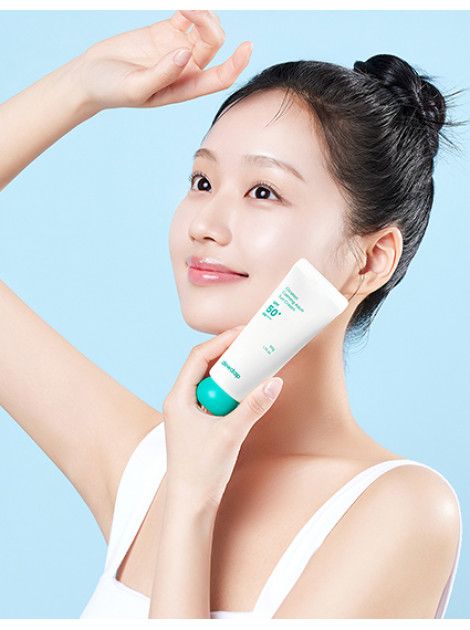
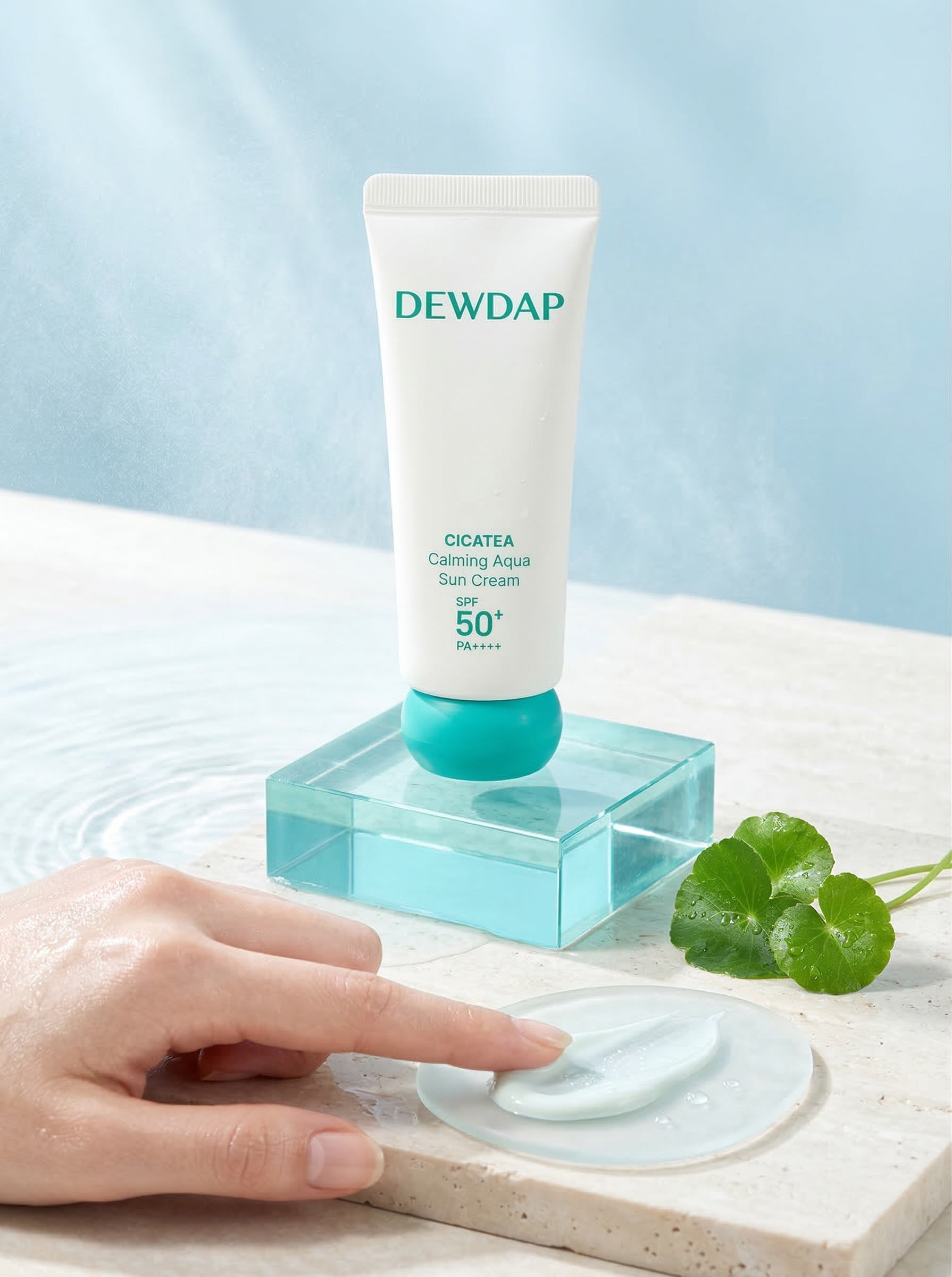
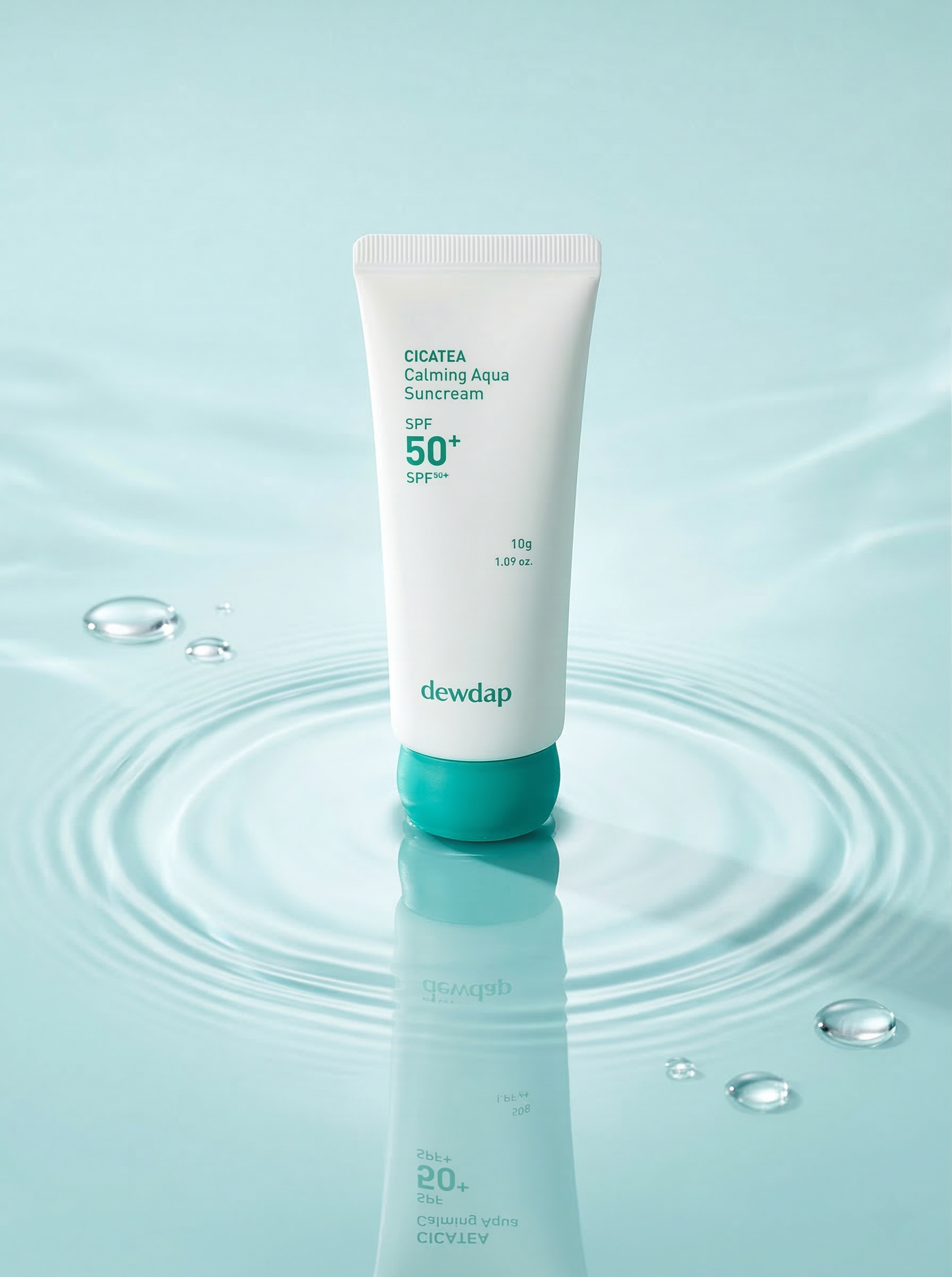
- Sensitive skin – Opt for mineral or hybrid sunscreens with calming ingredients like centella asiatica, panthenol, or madecassoside. The Dewdap CICATEA Calming Aqua Suncream is specifically formulated for sensitive skin, combining UV protection with centella-based soothing care. It provides reliable protection without irritating reactive skin.
- Combination skin – Lightweight emulsion-type sunscreens work well, providing hydration to dry areas without overwhelming oily zones.
- Acne-prone skin – Choose non-comedogenic formulas that are oil-free and fragrance-free. Gel types are usually the safest bet.
By Intended Use
- Daily wear under makeup – Watery essences or tone-up sunscreens create a smooth base for foundation.
- Outdoor activities – Choose water-resistant formulas and reapply every two hours or after sweating.
- Office or indoor days – A standard SPF 50+ PA++++ is sufficient, but remember that UVA rays penetrate windows.
The Dewdap CICATEA Calming Aqua Suncream
For those with sensitive or easily irritated skin, finding a sunscreen that provides robust protection without causing redness, stinging, or breakouts can be a challenge. The Dewdap CICATEA Calming Aqua Suncream was developed to address this exact need.
This sunscreen combines effective UV filters with a centella asiatica-enriched formula that calms and soothes the skin throughout the day. Its aqua-gel texture is lightweight and absorbs quickly, leaving no heavy residue or white cast. It serves as both a protective shield and a calming treatment, making it a practical choice for people who need their sunscreen to work with their sensitive skin rather than against it.
Application: How Much and How Often
The Right Amount
Most people do not apply enough sunscreen to achieve the stated SPF protection. The standard recommendation is approximately 1.25 milliliters (a quarter teaspoon) for the face alone. A helpful visual: a line of sunscreen across two fingers (the “two-finger rule”) provides roughly the right amount.
Applying half the recommended amount does not give you half the protection – it gives you significantly less. Under-application is one of the most common sunscreen mistakes.
When to Apply
Apply sunscreen as the last step of your skincare routine, before makeup. Chemical sunscreens should ideally be applied 15 to 20 minutes before sun exposure to allow the filters to stabilize on the skin. Physical sunscreens provide immediate protection upon application.
Reapplication
Sunscreen degrades with exposure to UV light, heat, and sweat. For continuous protection, reapply every two hours during prolonged sun exposure. If you are indoors with minimal sun exposure, reapplication is less critical but still beneficial if you sit near windows.
Reapplication options for those wearing makeup:
- Sunscreen cushion compacts (a popular Korean format)
- Sunscreen mists or sprays applied over makeup
- Sun-protective setting powders
Common Sunscreen Myths Debunked
Myth: You Do Not Need Sunscreen on Cloudy Days
Reality: Up to 80 percent of UV radiation penetrates cloud cover. UVA rays, responsible for photoaging, are present at consistent levels throughout daylight hours regardless of clouds.
Myth: Dark Skin Does Not Need Sunscreen
Reality: While higher melanin levels provide some natural UV protection, people with darker skin tones are still susceptible to UV damage, hyperpigmentation, and skin cancer. Sunscreen is essential for all skin tones.
Myth: A High SPF Means You Can Stay in the Sun Longer
Reality: SPF 50 does not mean you can safely stay in the sun fifty times longer. Higher SPF provides marginally more protection but still requires reapplication every two hours. No sunscreen provides 100 percent protection.
Myth: Sunscreen Causes Breakouts
Reality: Modern Korean sunscreens are formulated to be non-comedogenic and lightweight. If a sunscreen causes breakouts, it is likely the specific formula – not sunscreen in general – that is the problem. Switching to a gel-type or mineral formula usually resolves the issue.
Making Sunscreen a Non-Negotiable Habit
The Korean approach to sunscreen is simple: it is the most important product you will use every day, period. UV protection prevents more visible aging than any serum, cream, or treatment. It prevents dark spots from forming and existing spots from darkening. It protects against serious health risks.
Finding a sunscreen you genuinely enjoy wearing is the key to making it a daily habit. Korean sunscreens make this easy by offering formulations so lightweight and elegant that you might forget you are wearing sun protection at all. That is the K-beauty difference.